

Key Traits of a Top Frozen Food Factory in Malaysia
13/01/2026
Makanan Sejuk Beku 101 – A Complete Guide for Modern Malaysian Families
15/01/2026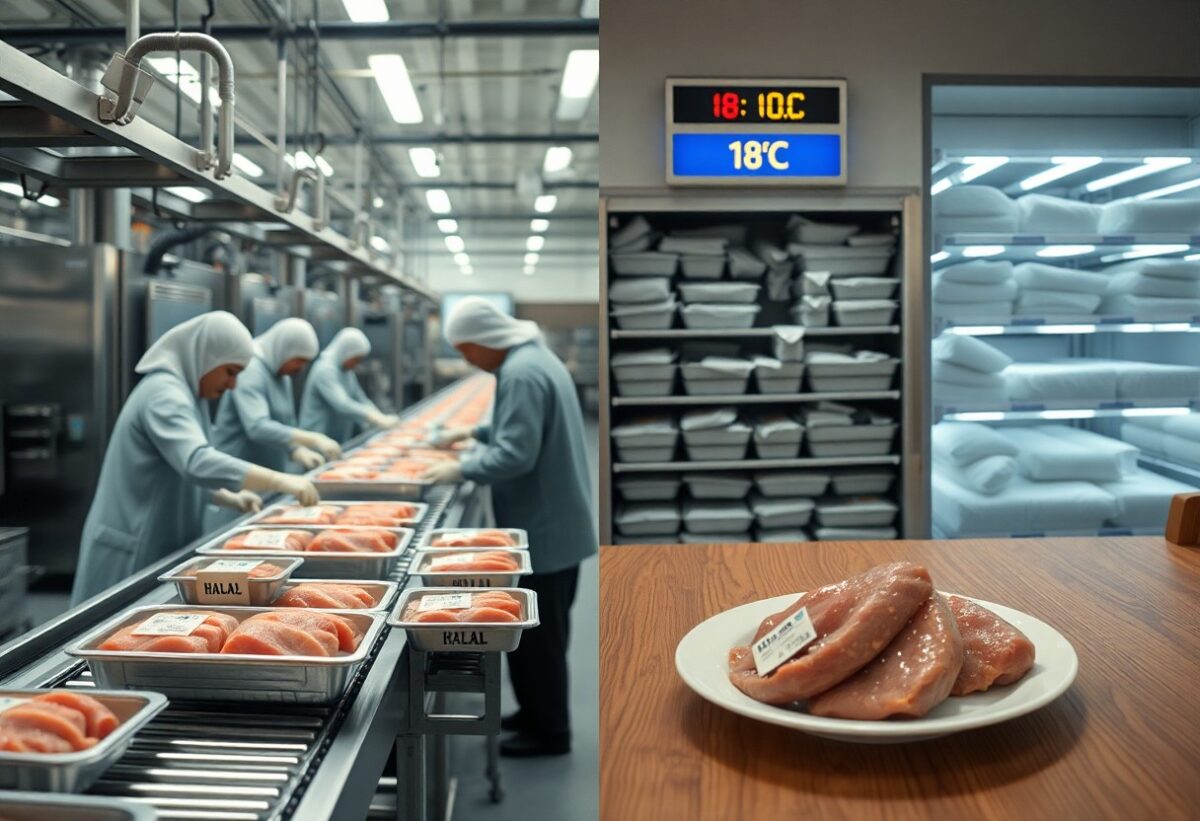
Just as you open a pack of halal sejuk beku, you join a journey from certified sourcing and hygienic processing to rapid freezing, cold-chain transport, and safe storage, so you can enjoy convenient, flavorful meals with confidence-this post walks you through each step and the checks that protect your plate.
Key Takeaways:
- Halal-certified sourcing and processing: ingredient verification, segregated production lines, certified slaughter, and regular audits ensure products meet Islamic dietary laws.
- Cold-chain integrity and quality control: rapid freezing, continuous temperature monitoring, HACCP/GMP, tamper-resistant packaging, and traceability prevent contamination and preserve freshness.
- Clear labeling and consumer handling: halal logo, storage/defrost/cook instructions, best-before dates; correct thawing and cooking protect safety and maintain texture and nutrition.
What Are Halal Sejuk Beku Products?
Halal sejuk beku products are frozen items-like chicken, seafood, ready meals, and vegetables-processed to Islamic dietary rules and stored at -18°C or colder to maintain safety and quality. You’ll find clear batch codes, halal logos, and supply-chain traceability showing slaughter method, ingredient sources, and factory audits; typical shelf lives range from 3 months for some seafood to 6-12 months for frozen meats and prepared dishes, helping you plan meals without sacrificing compliance.
Understanding Halal Certification
When you scan a halal certificate you’re seeing more than a logo: certifiers such as JAKIM (Malaysia), MUIS (Singapore) and MUI (Indonesia) verify ingredient lists, on-site slaughtering or sourcing, and manufacturing controls through audits, ingredient testing, and annual renewals. You can often verify authenticity via QR codes or online registries, and some factories publish audit summaries showing corrective actions, which helps you trust both the halal status and overall food safety systems.
The Importance of Frozen Food
Freezing at -18°C locks in freshness and extends shelf life from days to months-commonly 6-12 months for meats and prepared meals-while slowing microbial growth and biochemical changes. You benefit from nutrient retention comparable to fresh for many vegetables, reduced spoilage, and safer transport across long distances, so your halal choices stay compliant and edible when you need them.
Practically, this means year-round access to seasonal ingredients and consistent portion control; technologies like IQF (individually quick frozen) preserve texture and allow single-serve convenience, and blast freezing minimizes ice crystals that damage cells. You gain flexibility in meal planning, lower household waste, and predictable quality whether you buy local halal brands or imported sejuk beku items.
The Journey Begins: From Factory to Freezer
When products leave the halal-certified plant they’re immediately routed to blast freezers that can reach −35°C within 20-30 minutes to lock in freshness, then packed into insulated cartons and loaded into refrigerated trucks held at −18°C. Transport is usually scheduled so you receive stock within 24-48 hours; cold-chain sensors and GPS tracking ensure cartons for your store or home stay within safe temperature limits until they reach your freezer.
The Manufacturing Process
You watch strict segregation of halal ingredients and certified suppliers feed the production line, where dhabiha-compliant slaughtering, trimming, and portioning happen under HACCP plans. Individual quick freeze (IQF) tunnels freeze items rapidly, packaging then uses modified atmosphere (typically 3-5% O2) and batch coding for traceability. Labels include production date, lot number, and storage guidance so you can check provenance before buying.
Quality Control Measures
You rely on a layered QC regime: microbiological batch testing (including Listeria and Salmonella), ATP surface swabs, routine metal-detection, and allergen segregation checks. Continuous temperature logs and real-time alarms guard the cold chain, while halal auditors verify compliance and issue certificates that travel with each lot, giving you confidence in product safety and religious compliance.
More specifically, traceability systems let you scan QR codes to view farm-to-freezer records and batch test results; shelf-life is validated (commonly 6-12 months at −18°C) via challenge and sensory tests; dataloggers record temperatures at 1-15 minute intervals; critical control points are monitored with automated alarms; and third-party halal and food-safety audits occur on a 6-12 month cycle to confirm ongoing conformity.
Storage: Keeping Halal Sejuk Beku Fresh
You should keep frozen halal products organized, labeled with production and freeze dates, and stored away from the freezer door to avoid temperature swings. Set your freezer to -18°C (0°F) for long-term quality, portion items before freezing to reduce thaw time, and use a first-in, first-out approach so older packs are used first; doing so preserves texture, flavor, and halal integrity from factory to your table.
Best Practices for Storage
You can extend shelf life by vacuum-sealing or using airtight containers, portioning meals into single-use packs, and dating everything clearly. Industry guidance suggests storing raw meats 6-12 months, fish 3-6 months, and ready meals 2-3 months for peak quality. Keep a thermometer in the freezer, check seals on packaging, and avoid overcrowding so cold air circulates evenly.
Storage Checklist
| Tip | Benefit |
|---|---|
| Vacuum-seal or airtight wrap | Minimizes freezer burn and odor transfer |
| Portion before freezing | Reduces waste and speeds thawing |
| Date-label every pack | Helps you follow FIFO and track freshness |
| Store away from door | Prevents exposure to warm air during opening |
| Keep freezer near full | Stabilizes temperature and reduces energy use |
The Role of Temperature
You should maintain a steady -18°C (0°F) as the industry standard to preserve safety and quality; fluctuations increase ice-crystal growth that damages texture and accelerates oxidation. Thaw in the fridge at around 4°C (39°F) and avoid refreezing once fully thawed, since that degrades moisture and mouthfeel. Monitor the freezer weekly with an appliance thermometer to catch deviations early.
More specifically, short warm periods speed quality loss: factories, distributors, and your freezer form a cold chain that keeps products stable at -18°C from packing until you store them. If the temperature rises repeatedly, expect color and texture changes within months rather than years; using a digital freezer thermometer (typically $5-$20) and grouping similar items helps you detect and limit those swings.
Temperature Guide
| Temperature | Effect / Recommendation |
|---|---|
| -18°C (0°F) | Optimal for long-term storage; preserves safety and quality |
| -12°C to -10°C | Shortens shelf life; increases freezer-burn risk and texture loss |
| Around 4°C (fridge) | Safe for thawing; use thawed items within 24-48 hours |
| >0°C | Active thawing; move to fridge and use quickly to avoid spoilage |
Distribution: Getting the Products to You
Your halal sejuk beku travels from regional cold-storage hubs to retail shelves using cross-docking and consolidation strategies that cut handling time; urban deliveries commonly arrive within 24-48 hours while rural routes can take 48-72 hours. Shipments are kept at −18°C or lower, tracked by batch numbers and QR codes so you can verify halal chain-of-custody and production dates before purchase.
Logistics and Transportation
Refrigerated trucks and multi-temperature trailers maintain setpoints around −18°C with tolerance bands of ±2°C, and GPS-enabled route optimization reduces transit time and fuel use. Distribution partners often consolidate multiple SKUs to serve 500-2,000 retail points weekly, and last-mile carriers use insulated vans or palletized cold boxes to preserve temperature during the final 6-12 hour delivery window to your store.
Ensuring Product Integrity
Sensors and data loggers record temperature every 5-15 minutes, creating an auditable record you can access via QR codes; HACCP, ISO 22000 and GMP frameworks guide handling, while tamper-evident seals and batch-level traceability let you confirm product history and frozen shelf life, typically 12-18 months depending on the item.
When a temperature breach occurs automated alerts (often within 5 minutes) trigger quarantine and corrective actions such as rerouting or rapid sampling. Distributors perform routine microbiological swabs, ATP hygiene checks, and periodic third-party laboratory testing; audits by halal authorities and retained documentation (commonly 2+ years) complete the chain so you receive safe, verifiable halal frozen products.
Cooking with Halal Sejuk Beku Products
Easy and Delicious Recipes
Try a 20-minute stir-fry using frozen shrimp: thaw under cold running water for 10 minutes, then sauté with 2 cloves garlic, 1 chopped chili, 1 tbsp soy sauce and 1 tbsp kecap manis. Bake frozen chicken nuggets at 200°C for 15-18 minutes for a quick family snack. For dinner, toss 500g frozen mixed vegetables with pre-cooked halal beef and a splash of stock for a one-pan meal that serves four in under 30 minutes.
Tips for Cooking Frozen Food
Thaw safely in the fridge for 8-12 hours or use cold-water thawing for 30-60 minutes; some items like peas and breaded products can be cooked from frozen. Use a probe thermometer-poultry 74°C, ground meats 71°C-and set ovens to 180-200°C for most frozen meals. Avoid refreezing fully thawed products, and slice semi-thawed fish or meat for even portions.
- Thawing: fridge 8-12 hours or cold water 30-60 minutes.
- Temperature targets: poultry 74°C, ground meat 71°C.
- Cook-from-frozen: vegetables and breaded items often skip thawing.
- Recognizing the package’s recommended method preserves texture and safety.
If you want more precision, note that air fryers cut cooking time by about 20-30% versus conventional ovens, while convection settings shave roughly 10-15%. Microwave defrost at 30% power in 2-4 minute intervals, flipping items halfway. Sear frozen steaks on moderate heat to avoid burning the outside; finish in a 180°C oven until internal temp reaches target. When marinating, do so after thawing to ensure the marinade penetrates.
- Air fryer: 180°C for 10-15 minutes for 200-300g frozen chicken pieces.
- Convection oven: reduce time 10-15% vs conventional; preheat to 190-200°C.
- Microwave defrost: 30% power, 2-4 minute intervals, flip halfway.
- Recognizing how each appliance alters time helps you plan accurately.
Benefits of Choosing Halal Sejuk Beku
Convenience for Busy Lives
You can stock single-portion halal sejuk beku meals that stay good for up to 12 months in a properly set freezer, freeing you from daily grocery trips. Ready-to-cook options often take 10-20 minutes, so you save hours each week on meal prep; batch-cook two trays and you have lunches for five workdays. Portion control helps you budget calories and reduce food waste.
Supporting Ethical Practices
Certified Halal Sejuk Beku gives you documented assurance: agencies like JAKIM (Malaysia), MUI (Indonesia) and MUIS (Singapore) audit processes, ingredient sourcing, and slaughter records, usually on a 6-12 month cycle. That means your frozen chicken or beef isn’t just labelled; you can expect traceable provenance, ingredient transparency, and compliance with halal handling throughout the factory and cold chain.
For instance, several manufacturers now include QR codes on packages that you can scan to view farm origin, slaughter date, HACCP and halal certification data, and cold-chain logs showing storage temperature. Some processors pilot blockchain for immutable traceability, while independent auditors perform on-site inspections every 6-12 months, giving you clearer evidence that ethical and food-safety standards were followed.
To wrap up
From above the processing line to your freezer, the journey of Halal Sejuk Beku products shows how strict halal certification, controlled freezing, traceable sourcing and hygiene checks work together to bring safe, flavorful meals to your table. You can trust clear labeling and consistent quality, enjoy the convenience of ready-to-heat options, and feel confident serving products aligned with your values and daily routine.
FAQ
Q: What steps ensure a Halal sejuk beku product remains Halal from the factory to my table?
A: Maintaining Halal integrity begins with sourcing Halal-certified ingredients and continues through dedicated production lines, certified slaughter practices for meat, and strict segregation of Halal and non-Halal materials. Factories implement Halal management systems alongside food-safety programs (HACCP, GMP) and undergo regular audits by recognized Halal certification bodies. Traceability systems log ingredient origins, batch numbers and processing records; sealed, tamper-evident packaging preserves product status; and clear Halal labeling identifies the certifying authority. Cold-chain control, documented transport protocols and retailer handling procedures complete the chain so the product retains its Halal status until it reaches consumers.
Q: How do freezing, storage and transport practices protect quality and safety of Halal frozen products?
A: Rapid freezing (blast freezing) locks in texture, flavor and microbial control by minimizing ice crystal damage and quickly lowering temperatures. Packaging designed for barrier protection prevents contamination and freezer burn. Storage and transport maintain continuous temperatures (commonly at or below −18°C) using validated freezers, refrigerated trucks, insulated containers and temperature loggers with alarms. Proper inventory rotation, lot tracking and shelf-life labeling prevent use of compromised stock. Regular equipment maintenance, documented corrective actions for temperature excursions and staff training on cold-chain protocols ensure both food safety and product quality are preserved throughout distribution.
Q: How can consumers verify authenticity and handle Halal sejuk beku products safely at home?
A: Verify authenticity by checking for a clear Halal logo and the name of the certifying body, scanning QR codes or entering batch numbers on the manufacturer’s traceability portal, and confirming ingredient lists and production/best-before dates. Ensure packaging is intact and stored frozen immediately after purchase. At home, keep products frozen until use, thaw in the refrigerator or according to label instructions (avoid countertop thawing), cook to recommended internal temperatures, and avoid cross-contamination by using separate utensils and surfaces for raw and cooked foods. Do not refreeze fully thawed products unless instructions permit partial refreeze, and contact the manufacturer or certifier if label information seems inconsistent.


