Frozen Food Factory Standards in Malaysia – From Halal Process to Quality Control
17/01/2026
Most of what you value in reliable, delicious frozen meals is shaped by rigorous quality checks, transparent sourcing, and skilled staff working in hygienic, modern facilities; in this post you’ll see how a Malaysian manufacturer puts your safety, taste preferences, and sustainability first so you can buy with confidence and enjoy consistent, convenient meals at home.
Key Takeaways:
- Strict food-safety systems and certifications (HACCP, GMP, HALAL) plus routine lab testing ensure product safety and consistency.
- Transparent sourcing and traceability from trusted local suppliers support quality control and ethical supply-chain practices.
- Advanced cold-chain logistics, automated production lines, and continuous R&D maintain freshness, extend shelf life, and drive product innovation.
The Malaysian Frozen Food Industry
You operate in a market where convenience, halal assurance and cold-chain reliability shape buying decisions; frozen retail surged during the pandemic and now posts steady 3-5% annual growth, while exports to ASEAN and the Middle East expand as manufacturers scale HACCP/GMP and Halal certifications to meet both domestic and international demand.
Overview of the Market
Modern trade and e-commerce both drive buying: Aeon, Lotus’s, Mydin and online grocers push private‑label frozen lines, and you increasingly pick ready‑to‑cook meals, frozen seafood and parathas; younger households prefer single‑serve or heat‑and‑eat options, while foodservice demand recovers as hotels and F&B chains reopen.
Key Players
Major names you’ll see include QL Foods (QL Resources) for integrated seafood and poultry processing, Kawan Food leading frozen bakery exports, Ayamas for retail poultry and ready meals, and multinational brands like Nestlé and McCain in processed segments; contract manufacturers and private‑label suppliers also populate supermarket aisles.
Note that QL leverages vertical integration-feedmills, farms and processing-to lower costs and support exports, Kawan exports parathas and frozen bakery products to 20+ countries using automated lines, and Ayamas prioritises Halal certification and broad retail distribution; many players invest in HACCP/GMP, traceability systems and multi‑temperature cold storage to win institutional contracts.
Who We Are
Based in Klang, Selangor, we are a family-owned frozen food manufacturer founded in 2004 that you can visit to see our production line; we employ 120 people across R&D, quality and production and make over 50 SKUs from dumplings to ready meals. You’ll notice clear labelling, batch traceability and consistent portioning on every pack, showing how your expectations translate into daily operations.
Company Background
Our founders started with a 500 m² facility and expanded to a 4,000 m² plant with capacity for 1.2 million packs per month, so your large orders get timely fulfillment. We export to 12 countries across ASEAN and the Middle East, and hold ISO 22000 and HACCP certifications to demonstrate our commitment to food safety and export standards.
Our Mission and Values
Our mission is to deliver safe, tasty frozen food at fair prices while protecting the environment, and you’ll see this reflected in our three priorities: safety, flavour and reliability. We set measurable targets-95% on-time delivery and under 1% consumer complaints-to keep your supply dependable and confidence high.
For example, you benefit from sourcing that favours local suppliers: 70% of our raw ingredients come from Malaysian farms, shortening lead times and supporting local communities. Energy-efficient blast freezers reduced consumption by 25% since 2019, and each employee completes 40 hours of food-safety and culinary training annually, ensuring the products you buy meet strict standards from farm to freezer.
Manufacturing Process
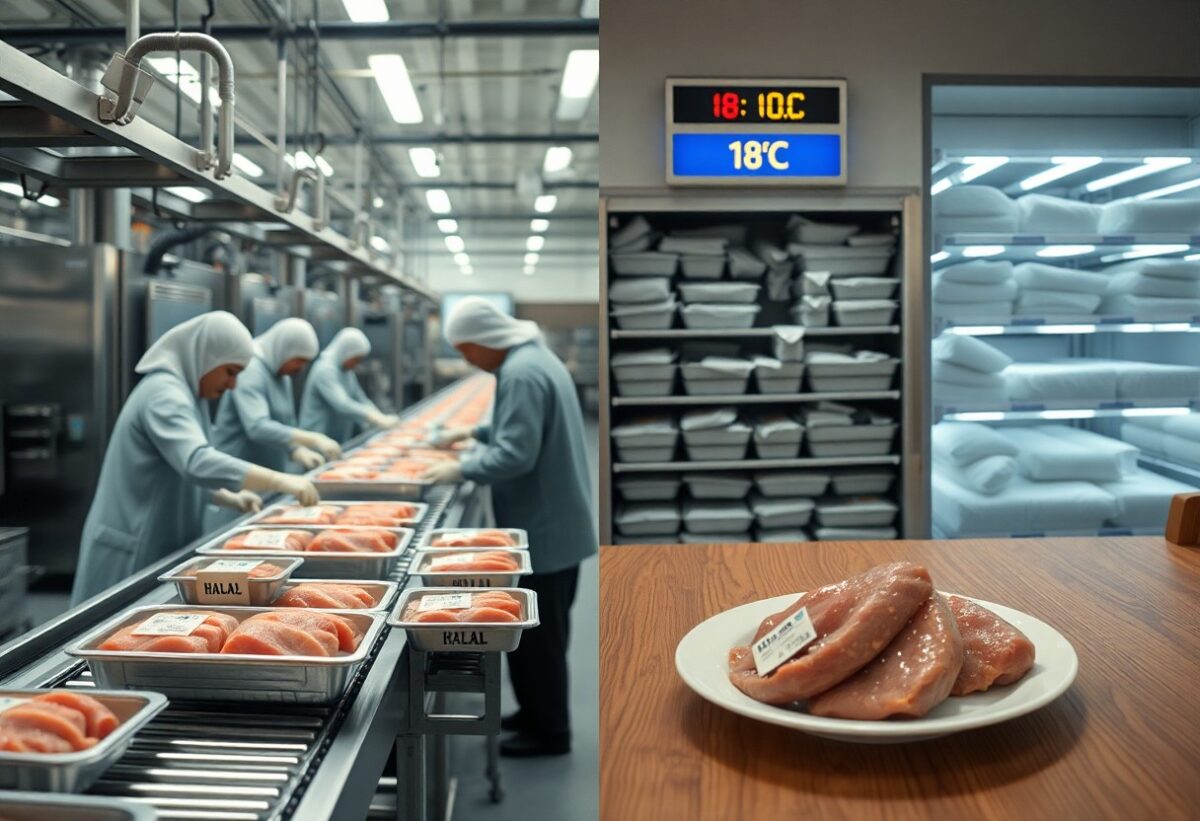
Every production run follows a defined flow: raw material reception, four-stage inspection, weighing, cutting, blanching, portioning, IQF freezing and hygienic packing; you can trace each batch by its code from supplier to finished pallet. Blast freezers reduce core temperature to -18°C within 90 minutes, finished packs pass metal detection and X-ray checks, then move to cold storage where temperature logs protect your product quality throughout the cold chain.
Sourcing Quality Ingredients
You receive ingredients from audited suppliers across Peninsular Malaysia and nearby regions, with supplier audits conducted twice yearly and certificates of analysis provided for every lot. On-site farm visits and Halal verification ensure traceability back to the farm, while ingredient sampling in our lab (micro and chemical) verifies quality before anything enters production, so your finished products start with documented, tested inputs.
State-of-the-Art Technology
You benefit from IQF tunnels that freeze individual pieces to -40°C surface within minutes, automated portioning lines with ±2% accuracy, and metal detectors with 0.8 mm sensitivity; joint X-ray inspection catches dense contaminants. Programmable logic controllers coordinate packaging speed, so throughput and safety stay balanced while you get consistent portion sizes and low contamination risk.
You’ll also see integrated controls: a SCADA dashboard logs temperature every minute and issues alerts to your quality team, while the ERP ties production lots to lab results with 24-48 hour turnaround for test data. Energy-efficient ammonia refrigeration with heat recovery lowers utility use by about 10-15%, and routine validation studies (shelf-life at −18°C) confirm product stability for up to 12 months, giving you measurable reliability across the supply chain.
Quality Assurance
You benefit from our QA team verifying every batch against HACCP, GMP and HALAL standards, with weekly microbiology tests for Salmonella, Listeria and E. coli, daily ATP swabs for surface hygiene, and continuous digital temperature logging at −18°C to protect frozen integrity through production and distribution.
Safety Standards
You’ll notice allergen‑segregated zones, color‑coded utensils and metal detectors calibrated to detect contaminants down to 2.5 mm; staff complete HACCP and HALAL handling training with annual refreshers, while finished products undergo compositional checks and nutritional lab analysis prior to release.
Regular Inspections
You can expect daily line checks, weekly environmental swabs and monthly internal audits, with biannual third‑party inspections; HACCP, GMP and HALAL certifications are reviewed annually, and every non‑conformance is logged with corrective actions and timeline tracking in our QA system.
You’ll find retained samples from every production run kept for 12 months for spot testing and recall verification, equipment such as metal detectors and weighing scales calibrated monthly, temperature probes validated after maintenance, and quarterly traceability drills that confirm you can track any product back to raw‑material lot numbers within minutes.
Commitment to Sustainability
When you tour our Klang facility, sustainability is visible: a 150 kW rooftop solar array and LED retrofit helped cut grid energy use by 22% since 2018, our water-recovery system saves about 5,000 liters daily, and process improvements have allowed us to divert 95% of production waste from landfill-figures you can verify on our annual sustainability summary available at the reception.
Eco-Friendly Practices
As you walk the production line you’ll spot variable-frequency drives on compressors, optimized blast-freezing that reduced energy per kilogram by 12%, and packaging switched to 50% recycled PET while lightweighting lowers material use by 18%; routine energy audits and ISO 14001-aligned procedures ensure these measures are tracked and improved each quarter.
Community Initiatives
You benefit from our outreach: we donate roughly 1.5 tonnes of frozen meals monthly to local shelters, have run 120 supplier training sessions since 2019, and offer 20 student internships annually to build food-safety skills in the Klang community.
In more detail, you can see the impact in specific campaigns-during the 2021 Selangor floods we coordinated logistics to deliver over 10,000 ready meals to affected families, our supplier program increased smallholder yield by an average 18% through GAP and cold-chain workshops, and our annual “Meals for School” drive provides 3,000 school lunches each year while creating pathways for graduates into our apprenticeships.
Customer Experience
You get consistent quality and speed: HACCP and JAKIM Halal-certified production, daily 50-point quality checks, and average domestic delivery within 2-4 days. Customer care responds within 24 hours, offers order tracking and temperature-controlled logistics, and provides tailored delivery windows for HORECA accounts so you avoid weekend stockouts and maintain menu consistency.
Product Range
Explore over 100 SKUs across dim sum, ready-to-cook mains, frozen vegetables, and seafood, with private-label options and MOQs suited to SMEs (from 50 kg). New product launches occur twice yearly and seasonal lines for Ramadan and Lunar New Year help you refresh menus and capture peak demand.
Testimonials
Customers praise reliability and flavor: a Kuala Lumpur bistro reported an 18% sales uplift within three months after switching to your frozen parathas, while an East Malaysia distributor increased reorder frequency by 35%. More than 2,000 reviews average 4.6/5, reflecting steady satisfaction across retail and foodservice clients.
Diving deeper, a Penang seafood stall cut prep time from 45 to 12 minutes using your pre-portioned prawns, boosting weekend turnover 40% and lowering labor costs 22%. You also receive quarterly feedback reports from key accounts so product teams can refine texture, spice levels, and packaging based on real sales data.
Summing up
Upon reflecting, you see how consistent quality controls, local sourcing, modern hygiene practices, and transparent processes give you confidence in taste and safety. Your meals stay convenient, nutritious, and responsibly produced, supported by strong supplier relationships and ongoing innovation. You can rely on this Malaysian manufacturer to deliver dependable frozen options that fit your lifestyle and values.
FAQ
Q: How does a trusted Malaysian frozen food manufacturer guarantee food safety and product quality?
A: The manufacturer implements an integrated food safety management system including HACCP and ISO 22000, Halal certification for Muslim consumers, and Good Manufacturing Practices (GMP). Procedures include supplier approval, incoming-material testing, in-process controls, and finished-product microbiological and chemical testing. Metal detectors and X-ray screening prevent foreign-object contamination. Routine environmental swabs, sanitation schedules, pest control, and documented staff hygiene and training programs reduce contamination risks. All production lots are recorded for traceability and retention samples are kept for verification and shelf-life studies.
Q: What sourcing and traceability measures ensure the ingredients are safe and ethically procured?
A: Suppliers undergo qualification audits covering food safety, legal compliance, and ethical standards. Quality agreements define specifications, testing requirements, and corrective actions. Raw ingredients are sampled on receipt for identity, pathogen screening, and residue analysis where relevant. Batch and lot numbers are assigned and tracked through an ERP or traceability system, enabling rapid identification of affected batches and targeted recalls. The company maintains supplier documentation including certificates of analysis, Halal certificates, and audit records to demonstrate provenance and compliance.
Q: How does the company maintain the cold chain and packaging to preserve freshness and extend shelf life?
A: Critical control points include rapid chilling or blast freezing (often IQF) immediately after processing, storage at industry-standard frozen temperatures (typically -18°C or below), and temperature-monitored transport using refrigerated trucks with data loggers and GPS. Packaging uses barrier films, vacuum sealing or modified atmosphere techniques where appropriate to limit oxidation and freezer burn. Shelf-life is determined by real-time and accelerated stability testing; labels include storage and thawing instructions. Contingency plans cover power failures, rerouting shipments, and product holds to protect product integrity during distribution.